
In today’s rapidly evolving telecom and fiber network landscape, maintaining infrastructure efficiency is just as critical as active service monitoring. This is where a Passive Network Operations Center (Passive NOC) plays a vital role. Unlike traditional NOCs that focus on active network elements, a Passive NOC is dedicated to monitoring, managing, and optimizing passive infrastructure such as fiber cables, ducts, poles, and related assets.

Let’s explore its importance in detail:
1. Enhanced Infrastructure Visibility
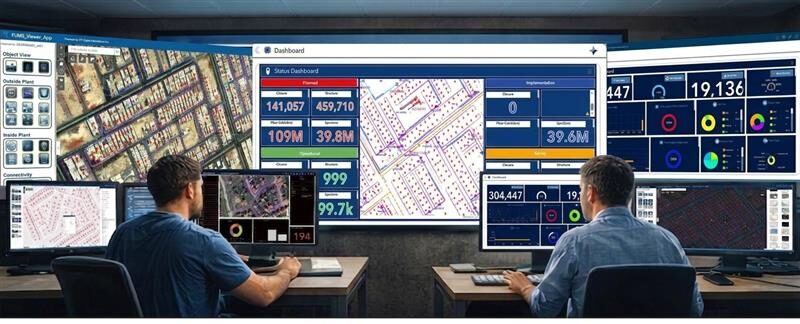
A Passive NOC provides a centralized view of all passive network assets. It enables organizations to track fiber routes, ducts, splice points, and physical infrastructure in real time.
Why it matters:
Better visibility reduces blind spots, improves planning, and ensures accurate asset management.
2. Improved Fault Detection & Resolution
With Passive NOC systems, operators can quickly identify physical faults such as fiber cuts, degradation, or connectivity issues.

Why it matters:
Faster fault detection leads to reduced downtime and improved service reliability for customers.
3. Efficient Resource Utilization
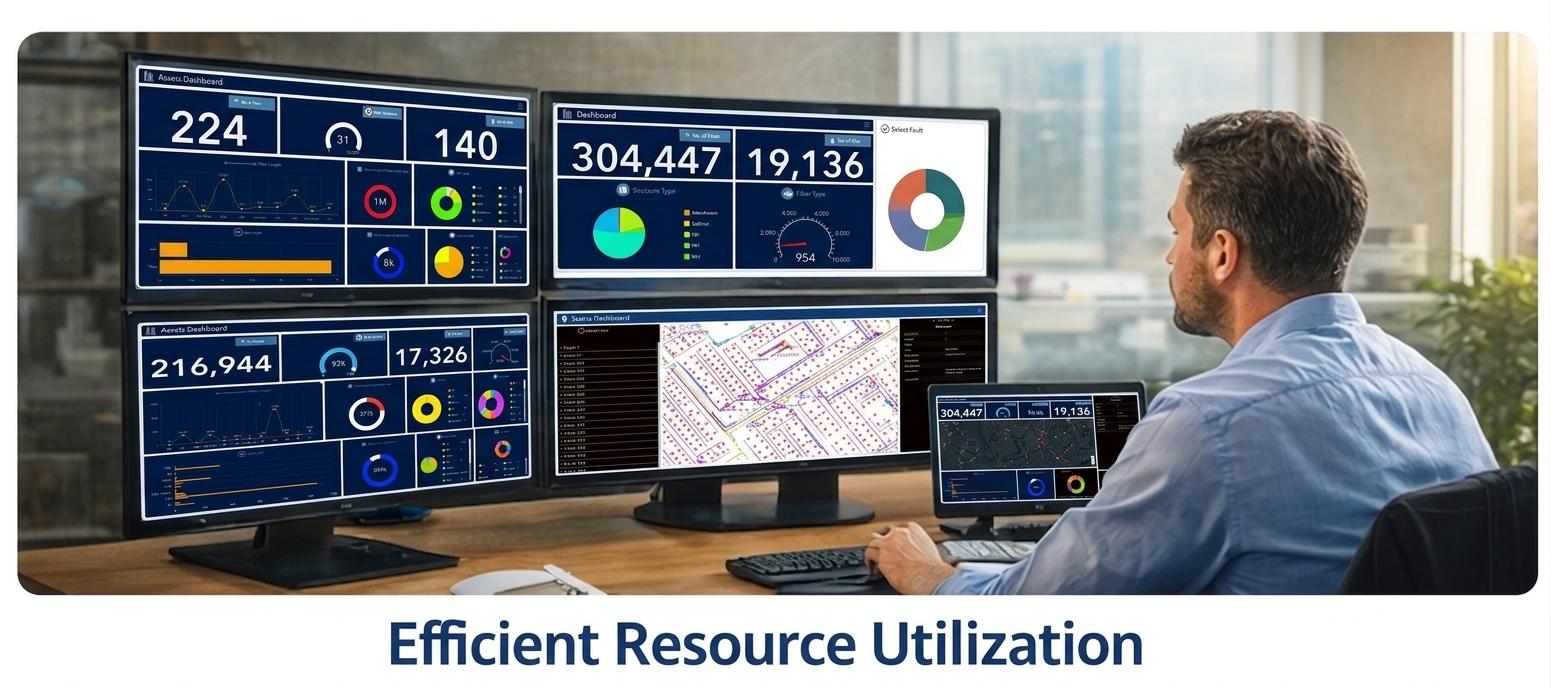
Passive NOC helps in optimizing the use of existing infrastructure by identifying unused or underutilized network capacity.
Why it matters:
This minimizes unnecessary investments and maximizes ROI on existing assets.
4.Cost Reduction
By automating monitoring and reducing manual inspections, Passive NOCs significantly cut operational and maintenance costs.

Why it matters:
Lower OPEX while maintaining high network quality.
5.Seamless Integration with Active NOC
A Passive NOC complements Active NOC operations, providing a complete end-to-end network view.

Why it matters:
Ensures both physical and logical layers of the network are fully optimized.
6.Scalability for Future Networks
As fiber networks expand (FTTH, 5G backhaul), Passive NOCs ensure infrastructure can scale efficiently.

Why it matters:
Supports long-term growth without operational complexity.
Why Passive NOC is a Game-Changer
1. Deep Performance Insights (DPI)
Have you ever had a user complain that “the internet is slow,” but your active monitors show all green lights?
A Passive NOC uses Deep Packet Inspection (DPI) to look inside the traffic. It can tell you if a specific application is lagging due to a server-side delay or a network bottleneck, providing clarity that active polling simply cannot match.
2. Strategic Capacity Planning
Active monitoring tells you what is happening now. A Passive NOC tells you what has happened over the last month, quarter, or year. By analyzing long-term trends through FUMS, leadership can make data-driven decisions on when to upgrade hardware, preventing costly emergency expenditures.
3. Compliance and “Golden Records“
For industries like finance and healthcare, keeping a record of network transactions isn’t just a good idea—it’s the law. A Passive NOC provides an immutable audit trail, ensuring that you are always ready for a compliance check.
Strengthening Your Infrastructure with FUMS
Integrating a FUMS-driven approach into your Passive NOC ensures that your monitoring isn’t just comprehensive, but also unified. It bridges the gap between raw data and actionable intelligence, allowing your technical teams to focus on strategy rather than just putting out fires.
Conclusion
A Passive NOC isn’t about sitting back; it’s about having the most powerful vantage point possible. By observing everything without disrupting anything, it provides the security, foresight, and performance data required to lead in a digital-first world.
Visualizing the PNOC
To help you visualize how this looks in a professional environment, here is an image of a modern control room focused on these large-scale analytical displays.